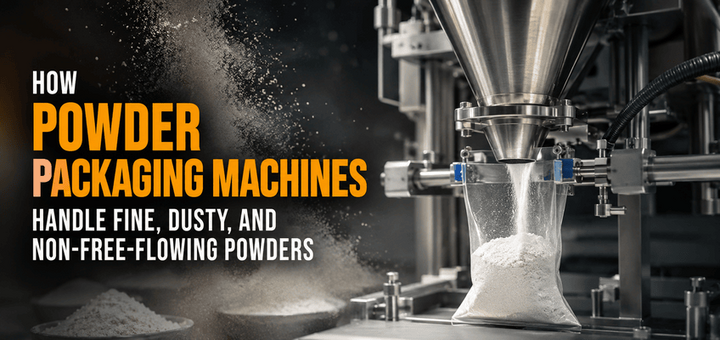
In many packaging facilities, a fine powder begins flowing smoothly from the hopper only to bridge, create clouds of dust, or deliver inconsistent weights minutes later. Humidity shifts, particle size variations, and product settling turn what should be a straightforward fill into repeated stops and adjustments. An automatic powder filling machine addresses these issues by combining controlled dosing, agitation, and containment features that keep the process stable. Fine powders demand precise metering. Dusty materials require enclosed paths and extraction. Non-free-flowing powders need mechanical assistance to maintain consistent flow. When these elements work together, production lines achieve accurate fills, cleaner environments, and fewer interruptions.
Consistent powder packaging depends less on speed and more on matching the filling method to how the powder actually behaves.
Industry Snapshot
Industry analyses estimate that powders and granular materials represent a substantial share of flexible packaging applications, particularly in food, nutraceuticals, and specialty chemicals. Multi-layer barrier films and controlled atmosphere options help protect oxygen- and moisture-sensitive powders. Facilities that implement proper dust containment and density-compensated dosing commonly report reduced product giveaway and improved workplace cleanliness compared with open or manual methods.
Why Fine, Dusty, and Non-Free-Flowing Powders Pose Unique Challenges
Fine powders have small particle sizes that increase surface area and promote cohesion or electrostatic clinging. Dusty materials readily become airborne, creating cleaning burdens and potential cross-contamination risks. Non-free-flowing powders tend to bridge, rat-hole, or compact inside hoppers and tubes, interrupting consistent delivery to the fill point.
These behaviors affect both accuracy and operational efficiency. Underfills and overfills increase material costs. Dust accumulation requires more frequent cleaning and can affect seal quality if particles reach the sealing area. Bridging forces operators to intervene, reducing overall equipment effectiveness. Packaging engineers frequently observe that filling accuracy is influenced not only by the filling system but also by product density, ambient humidity, vibration, and pouch stability during sealing. Understanding these interactions allows teams to select the right combination of hardware and process settings.
How Do Powder Filling Machines Manage Fine Powders?
Fine powders require careful control of metering speed, agitation, and feedback to prevent both flooding and incomplete fills. The goal is steady, predictable delivery without excessive aeration or compaction.
Servo-driven systems excel because they can adjust rotation speed and duration in real time based on weight feedback. Enclosed product paths limit the escape of airborne particles. Density compensation features help maintain target weights when bulk density changes between batches or during a long run.
Key approaches include:
- Servo Auger Filling: A precision screw meters powder by controlled rotations. Feedback from load cells allows immediate correction for density shifts, supporting tight tolerances on fine materials such as protein powders or spice blends.
- Agitated Hoppers: Mechanical or vibratory agitation prevents settling and promotes uniform flow into the auger or cup. This reduces the chance of voids or surges that affect fill weight.
- Enclosed Transfer Paths: Tubes and hoppers designed with minimal openings keep fine particles contained, lowering dust levels around the machine and improving cleanliness.
- Real-Time Weight Feedback: Continuous monitoring compares actual dispensed weight against the target and adjusts the next cycle automatically, minimizing cumulative error.
- Gentle Top-Off Cycles: An initial bulk fill followed by a slower precision top-off improves accuracy without creating excess dust from high-speed delivery.
- Anti-Static Features: Grounding or ionization helps reduce clinging of very fine particles to surfaces, supporting more consistent flow and cleaner seals.
These methods allow fine powders to be packaged with greater consistency and less manual intervention than open volumetric systems alone.
What Techniques Control Dust During Packaging?
Dust control protects product quality, operator safety, and equipment reliability. Effective systems combine physical containment with active extraction and cleaning design.
Enclosed Product Paths and Sealed Interfaces
Hoppers, transfer tubes, and filling nozzles are designed to minimize open areas where powder can escape. Sealed connections between components reduce leakage points. When powder remains contained until it reaches the package, airborne dust decreases significantly.
Local Dust Extraction and Collection
Extraction points positioned near filling zones capture particles before they spread. Collected material can often be recovered or properly disposed of, limiting waste and improving air quality in the production area. Regular filter maintenance keeps extraction effective over time.
Smooth, Cleanable Surfaces
Stainless steel contact parts with polished finishes and minimal crevices make cleaning faster and more thorough. Wash-down capable designs support hygienic standards in food and nutraceutical environments. Easy access to hoppers and nozzles reduces downtime between product changeovers.
Controlled Fill Speeds and Settling
Slower initial fill rates or staged filling reduce the energy that lifts fine particles into the air. Product settling devices help powders rest evenly in the package before sealing, further limiting residual dust at the seal area.
Together these techniques create cleaner operating conditions while supporting accurate fills and reliable seals.
How Are Non-Free-Flowing Powders Handled Effectively?
Non-free-flowing powders tend to stick together, form bridges, or resist movement through narrow openings. Successful handling relies on mechanical assistance and careful geometry rather than relying on gravity alone.
Agitation keeps material mobile inside the supply hopper. Properly sized outlets and internal geometry reduce the likelihood of stable bridges. Feedback systems detect incomplete fills and allow corrective action before packages leave the line.
Practical solutions include:
- Vibratory or Mechanical Agitation: Controlled vibration or rotating agitators break up cohesive masses and promote steady flow toward the dosing unit without excessive densification.
- Optimized Hopper Geometry: Steep walls, smooth transitions, and appropriately sized outlets reduce bridging and rat-holing common with sticky or cohesive powders.
- Force-Feed Augers: Augers designed to actively pull material into the metering zone overcome resistance that gravity alone cannot address.
- Density Monitoring and Compensation: Sensors or weight-based algorithms adjust fill parameters when the powder becomes more compact during a run, maintaining target weights.
- Level Sensors and Alerts: Continuous monitoring of hopper levels and flow status alerts operators to potential interruptions before they stop the line.
- Gentle Handling Paths: Avoiding sharp bends or narrow restrictions helps cohesive powders move without further compaction or blockage.
These features allow non-free-flowing materials such as certain protein blends, cocoa powders, or specialty chemicals to be packaged with acceptable consistency and reduced operator intervention.
Which Filling Technologies Work Best for Difficult Powders?
The choice of filling technology depends primarily on particle size, cohesiveness, and target accuracy. Servo auger systems are widely used for fine and cohesive powders because they provide both metering precision and the ability to adjust for density changes. Volumetric cup fillers can work for more free-flowing materials but often struggle with sticky or highly variable powders without additional agitation. Multihead weighers are less common for very fine powders because of dust generation and residual buildup but can suit coarser granular products.
An automatic packaging machine that integrates the filler with bagging or pouch forming equipment must also consider drop height, settling, and seal-area cleanliness. Lower drop heights and controlled transfer reduce dust and improve package stability. Packaging engineers frequently observe that matching the filler to the powder’s actual flow behavior produces better long-term results than simply selecting the highest-speed option. Early product testing under realistic humidity and temperature conditions further improves the chance of stable performance after installation.
What Role Does Equipment Design Play in Accuracy and Cleanliness?
Equipment design influences both fill consistency and the ease of maintaining a clean production environment. Thoughtful engineering reduces places where powder can accumulate and makes routine cleaning practical.
Key design elements include:
- Hygienic Construction: Smooth welds, rounded corners, and accessible contact surfaces support thorough cleaning and reduce residue that could affect subsequent batches.
- Quick-Change Tooling: Tool-less or rapid-release components allow faster changeovers between different powders while minimizing the time spent disassembling and reassembling parts.
- Integrated Dust Management: Built-in extraction ports and sealed interfaces keep airborne particles under control without requiring extensive secondary equipment.
- Stable Mounting and Vibration Control: Rigid frames and controlled vibration prevent unwanted movement that can disturb powder levels or affect weighing accuracy.
- Recipe Storage and Feedback Loops: Stored parameters for different powders combined with continuous weight feedback reduce the need for manual adjustments during production.
- Accessible Inspection Points: Clear sight lines and easy access to critical zones allow operators to monitor performance and intervene early when conditions change.
Well-designed systems therefore support both accuracy and practical daily operation when handling challenging powders.
How Do Environmental Factors Affect Powder Filling?
Environmental conditions can change powder behavior significantly within a single shift. Humidity, temperature, and ambient air movement all influence flow, dust generation, and density.
Humidity and Moisture Absorption
Many fine powders absorb moisture from the air, becoming more cohesive or sticky. This can increase bridging tendency and alter bulk density. Controlled environments or sealed hoppers help limit exposure. In some cases, slight adjustments to agitation intensity compensate for changing flow properties.
Temperature Effects
Temperature variations can affect both the powder and the equipment. Warm conditions may increase electrostatic effects or change viscosity-like behavior in certain blends. Consistent ambient conditions around the filling zone support more predictable performance.
Vibration and Air Movement
External vibration from nearby equipment or drafts from HVAC systems can disturb powder surfaces and increase dust. Isolating the filling system and managing air flow around open areas reduces these disturbances. Stable mounting further protects weighing accuracy.
Attention to these factors during both design and daily operation helps maintain consistent results even when powder characteristics shift.
How Do These Systems Integrate with Broader Packaging Lines?
Powder filling rarely occurs in isolation. The filler must work in coordination with pouch forming or bagging equipment, checkweighers, metal detectors, and coding systems. Synchronization ensures that powder reaches the package at the right moment and that filled packages move smoothly to the next station without spills or incomplete seals.
An automatic packaging machine that forms the center of the line benefits from shared controls and recipe management so that changes in one area are reflected across the system. Downstream checkweighers provide a final verification of fill accuracy and divert any packages that fall outside limits. Upstream level controls and feeders maintain steady supply to the hopper. When these elements communicate effectively, the overall line achieves higher uptime and better data for continuous improvement. Clean transfer between stations further limits dust migration into sealing or inspection zones.
What Practical Steps Improve Performance with Challenging Powders?
Production teams can take several practical steps to improve results with fine, dusty, or non-free-flowing powders. These steps focus on preparation, monitoring, and maintenance rather than hardware changes alone.
- Product Characterization: Test flow properties, density range, and dustiness under expected humidity conditions before finalizing equipment settings. This information guides agitation intensity, fill speeds, and compensation parameters.
- Controlled Startup Sequences: Begin runs with lower speeds or staged fills to allow the system to stabilize before reaching full production rates. This reduces initial dust and weight variation.
- Regular Calibration and Cleaning Schedules: Maintain weighing systems and clean contact surfaces according to product and runtime. Residue buildup can gradually affect both accuracy and flow.
- Environmental Monitoring: Track humidity and temperature near the filling zone and adjust agitation or fill parameters when conditions change significantly.
- Operator Training on Flow Behavior: Train staff to recognize early signs of bridging, dusting, or density shifts so they can respond before packages are affected.
- Documented Recipes and Changeover Checklists: Store proven settings for each powder and use clear checklists to ensure consistent setup after product switches.
These practices help sustain performance over long production periods and reduce the frequency of unplanned stops.
How Do Production Teams Achieve Consistent Results with Difficult Powders?
Achieving consistent results with fine, dusty, and non-free-flowing powders requires a combination of appropriate equipment, process settings, and ongoing attention to material behavior. Teams that characterize their powders, select matching dosing technology, and maintain clean, controlled conditions typically see lower variation and higher overall equipment effectiveness. Feedback systems and recipe memory further reduce dependence on constant operator adjustment. When environmental factors are monitored and dust is contained, both product quality and workplace conditions improve.
The most reliable outcomes occur when the filling system is viewed as part of a complete packaging process rather than an isolated station. Integration with bagging equipment, inspection, and material handling creates a more stable flow from hopper to finished package. Continuous attention to density changes, humidity, and equipment condition keeps performance within acceptable limits even as product or ambient conditions shift.
Real-World Packaging Performance Example
A contract manufacturer packaging powdered beverage mixes replaced an older intermittent system with a continuous-motion setup equipped with a servo auger filler, agitated hopper, and enclosed transfer path. After implementation, the company reduced fill variation through real-time weight feedback, improved dust control with local extraction and sealed interfaces, shortened changeovers via stored recipes and quick-release tooling, and increased overall throughput while maintaining accurate seal integrity. Early product testing under typical production humidity levels allowed the team to set appropriate agitation and compensation parameters before full-scale runs began. The changes produced more consistent package weights, cleaner operating conditions, and fewer manual interventions during shifts.
Comparison Table of Approaches for Challenging Powders
|
Challenge Type
|
Primary Method
|
Supporting Features
|
Typical Benefit
|
|
Fine Powders
|
Servo auger with feedback
|
Density compensation, enclosed paths
|
Tight weight control, less dust
|
|
Dusty Materials
|
Enclosed systems + extraction
|
Sealed interfaces, smooth surfaces
|
Cleaner environment, better seals
|
|
Non-Free-Flowing Powders
|
Agitation + force-feed
|
Optimized hopper geometry, level sensors
|
Reduced bridging, steady flow
|
|
Variable Density
|
Real-time weight feedback
|
Recipe storage, adjustable speeds
|
Consistent fills across batches
|
|
High Changeover Frequency
|
Quick-release tooling
|
Hygienic design, documented recipes
|
Faster, cleaner product switches
|
FAQs About Powder Packaging for Difficult Materials
How do machines prevent bridging with cohesive powders?
Agitated hoppers, optimized geometry, and force-feed augers keep material moving and reduce the formation of stable bridges.
Can one system handle both fine and granular powders?
Many systems can switch between powder types with appropriate tooling and recipe changes, though highly cohesive and free-flowing materials may require different agitation settings.
What role does humidity play in powder filling?
Humidity can increase cohesiveness and alter bulk density. Monitoring ambient conditions and adjusting agitation or fill parameters helps maintain consistency.
How is dust controlled during high-speed filling?
Enclosed product paths, local extraction, controlled fill speeds, and smooth cleanable surfaces limit airborne particles and keep the sealing area cleaner.
What questions should buyers ask before selecting equipment?
Important questions include: What is the particle size and flow behavior of the primary powders? How variable is bulk density between batches? Is wash-down or dust extraction required? How many product changeovers occur each week? What fill accuracy and speed targets must be met? Will the system need to handle both free-flowing and cohesive materials?
To Bring It All Together
Powder packaging machines handle fine, dusty, and non-free-flowing powders by combining specialized dosing technology, agitation, dust containment, and real-time feedback. Servo augers with density compensation manage fine materials accurately. Enclosed paths and extraction control dust. Agitation and optimized geometry keep cohesive powders flowing. Environmental monitoring and hygienic design further support consistent performance. When these elements are matched to the actual behavior of the powder, production lines achieve better fill accuracy, cleaner conditions, and higher overall reliability. Teams that characterize their products, maintain equipment properly, and integrate the filler into a complete packaging process gain the most stable long-term results. The practical outcome is reduced waste, improved package quality, and more predictable daily operation across a wide range of challenging powder applications.
Stay tuned for the latest blogs on Etvenues!
 Venues