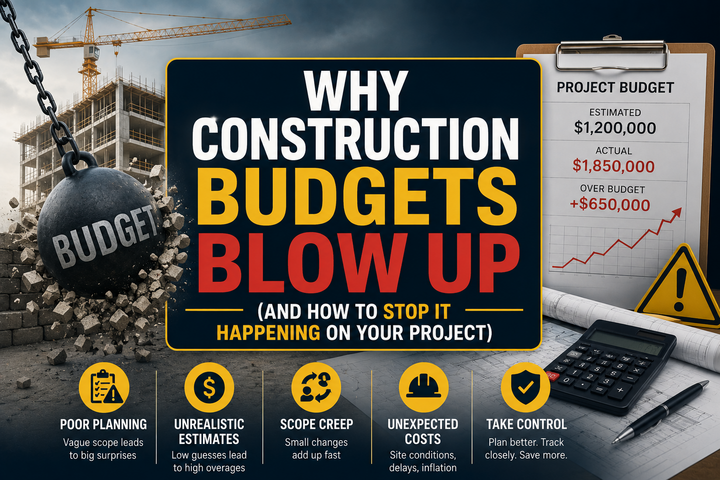
Almost every construction project starts with a number everyone agrees on. Then somewhere between breaking ground and handing over the keys, that number stops meaning anything. Owners end up paying more than they planned, contractors argue over what was actually included in the original scope, and everyone points fingers at everyone else. It's one of the most common frustrations in the industry, and it's rarely caused by one big mistake. Usually it's a handful of small ones that compound over the life of the project.
Here's a look at where budgets actually go wrong, and what tends to prevent it.
The Design Isn't Finished When Pricing Starts
A huge number of budget problems trace back to one root cause: pricing something before it's fully designed. Early estimates are based on assumptions, and assumptions change once drawings get finalized. A rough number given at the concept stage is not the same thing as a firm price based on completed plans, but plenty of owners treat the two as interchangeable. When the design evolves and the price moves with it, it feels like the budget "blew up," even though the process worked exactly as it should have.
Contractors Aren't Bidding on the Same Scope
This one catches people off guard constantly. You send drawings to three contractors, get three wildly different quotes back, and assume someone's trying to rip you off. More often, each contractor interpreted an ambiguous detail differently, priced different quality materials, or made different assumptions about what was included versus excluded. Without a detailed, itemized breakdown of quantities and materials that every bidder prices against equally, comparing quotes side by side is close to meaningless.
Change Orders Pile Up Without Being Priced First
Mid-project changes are normal. Almost no project finishes exactly as originally drawn. The problem isn't that changes happen, it's that they often get approved verbally on-site before anyone calculates what they'll actually cost. A "small" structural tweak or a client swapping out finishes can carry a price tag that only becomes obvious once the invoice arrives. Every change should be cost before work starts on it, not after.
Nobody Is Tracking Cost Against the Original Plan in Real Time
On a lot of smaller projects, cost tracking happens reactively. Invoices come in, someone tallies them up at the end of the month, and by the time anyone notices the trend, thousands of dollars have already been committed. Catching a budget drift early, while it's still a few thousand dollars off track, is a completely different problem than catching it after it's tens of thousands off track.
How Experienced Owners Avoid This
The projects that stay on budget tend to have one thing in common: someone whose entire job is watching the numbers from the very first sketch through to the final invoice. That's essentially what separates a smooth project from a chaotic one. If you've ever wondered exactly what that role involves and when it's actually worth bringing someone into that position, this breakdown of what a quantity surveyor does and when you need one covers the day-to-day responsibilities, how they differ from a project manager, and the signs that a project has reached the size where hiring one makes financial sense.
Beyond that specific role, a few habits go a long way regardless of project size:
-
Get a detailed, itemized cost breakdown before comparing any contractor quotes, not just a lump-sum total
-
Treat early estimates as a moving target, not a locked-in number, until the design is finalized
-
Price every change order before approving it, even the ones that seem minor
-
Review actual spend against the plan on a regular schedule, not just at major milestones
The Bottom Line
Budget overruns rarely come from one dramatic failure. They come from small gaps: a scope that wasn't clearly defined, a change that wasn't priced before it was approved, a comparison between quotes that were never really comparable in the first place. Tightening up those gaps, and knowing when it makes sense to bring in someone dedicated to cost control, is usually the difference between a project that finishes close to budget and one that doesn't.
 Venues