A developer is choosing between three construction companies to bid on a multi-million-dollar project. All three are licensed, insured, and have reasonable reputations. Two quote competitive prices. One quotes 15% higher.
Six months later, the developer is thrilled with the higher-bid contractor. The project stayed on schedule. Quality exceeded expectations. Budget discipline prevented overruns. Meanwhile, the lower-bid contractors? One is dealing with quality disputes and schedule delays. The other delivered a project requiring expensive remedial work.
This scenario illustrates something fundamental about construction: the lowest price rarely delivers the best value. The industry leaders who consistently win high-stakes projects and maintain thriving businesses distinguish themselves not through cost-cutting but through systematic excellence in how they approach work.
The Estimation Foundation
Top construction companies invest heavily in professional estimating. They understand that accurate cost projections enable profitable bidding, realistic scheduling, and quality execution. Their estimators perform detailed takeoffs, account for regional variables, and document assumptions.
Average contractors minimize estimating investment. They rush takeoffs, use outdated pricing, skip regional considerations, and build aggressive budgets. This creates systematic underbidding generating losses or quality compromises.
Portfolio Selection Strategy
Industry leaders are selective about which projects they pursue. They have clear criteria: project type alignment with expertise, geographic positioning, timeline feasibility, financial viability, and strategic fit.
Average contractors pursue every project. Any bid is a potential revenue opportunity. This creates chaos. Resources spread thin. Expertise gets diluted. Quality becomes inconsistent. Eventually, reputation damage follows.
Top-tier companies maintain quality by being disciplined about project selection. They say no to projects that don't align with their strengths. They maintain geographic focus because they understand regional markets, supplier networks, and labor dynamics. They turn down unrealistic timelines because they know schedule integrity determines quality.
This selectivity appears inefficient to outsiders. Turning down bids seems like leaving money on the table. But it's the opposite. Focusing on winnable, profitable projects at the sweet spot of company capability generates far better returns than spreading resources across everything.
Quality Infrastructure
Industry leaders maintain systems and infrastructure specifically designed to deliver quality. They invest in project management software, coordination protocols, trade relationship management, and quality assurance processes.
These systems cost money. A smaller contractor might think they're unnecessary overhead. But top companies understand that quality infrastructure prevents far more expensive problems than it costs to maintain.
A unified project management system enables real-time coordination between trades, reducing the conflicts and rework that plague less-organized projects. Established trade relationships ensure consistent quality from subcontractors and suppliers. Quality assurance protocols catch problems early before they compound into expensive issues.
This infrastructure feels expensive until you understand what it prevents: schedule delays, budget overruns, quality disputes, and reputation damage. The contractors maintaining systems look like they spend more money. In reality, they lose less money to preventable problems.
Talent Retention
The best construction companies retain experienced project managers and superintendents who understand how to execute complex work. This talent depth requires investment in competitive compensation and professional development.
Contractors who don't invest in retention cycle through inexperienced staff constantly. Inexperienced teams make mistakes creating delays and overruns. The contractors maintaining thriving businesses understand that talent retention is strategic investment.
Financial Discipline
Industry leaders maintain rigorous financial discipline. They track costs against budgets in real-time. They monitor project profitability across portfolio. They understand which project types and markets generate profit and which drain resources.
This financial clarity enables strategic decisions. If a project type consistently generates losses, they stop bidding it. If a market consistently delivers profitable work, they focus there. They make capital allocation decisions based on data rather than hope.
Average contractors operate with less visibility. They don't really know if projects are profitable until long after completion. They continue pursuing work that loses money simply because they lack clear data about project economics.
Project Management Excellence
Top construction companies deliver projects on schedule and budget through systematic project management. They use detailed schedules, resource planning, risk management protocols, and proactive problem resolution.
They start projects right. Preconstruction planning establishes clear goals, identifies risks, and aligns stakeholder expectations. Weekly coordination meetings prevent conflicts from festering into major problems. Regular schedule reviews catch slippage early when corrections are minimal.
This systematic approach feels burdensome compared to seat-of-the-pants management. But on complex projects, the difference between excellent and poor coordination translates directly into days of delay and thousands in cost overruns.
Learning from Industry Leaders
For developers, contractors, and project teams trying to understand what distinguishes industry-leading construction companies, examining their actual practices reveals patterns: careful project selection, investment in systems and talent, financial discipline, and commitment to project management excellence.
Those wanting to understand which companies are truly at the industry pinnacle often research comprehensive evaluations of top construction companies to understand their track records and strategic positioning.
The Pattern
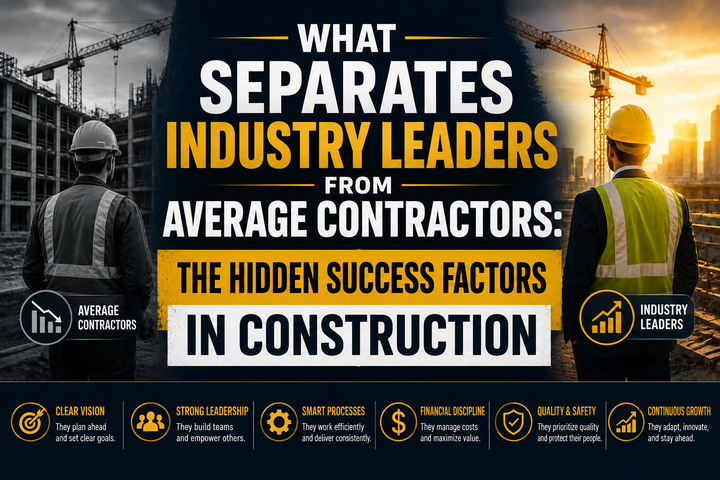
The most successful construction companies compete on value, not price. They invest in capabilities that enable reliable delivery. They maintain discipline about project selection and financial management. They develop and retain talent. They maintain systematic project management excellence.
These practices generate consistent profitability, strong reputation, and sustainable growth. They're not glamorous. They're just how industry leaders succeed.
 Venues